When I finished my talk on my use of storytelling at the recent Ark KCUK conference, a number of people suggested that these, ‘Cognitive Edge‘ techniques, with the way that they involve everyone and make space and time for making sense of each and everyone’s contributions, would be very useful in conciliatory and arbitration situations.
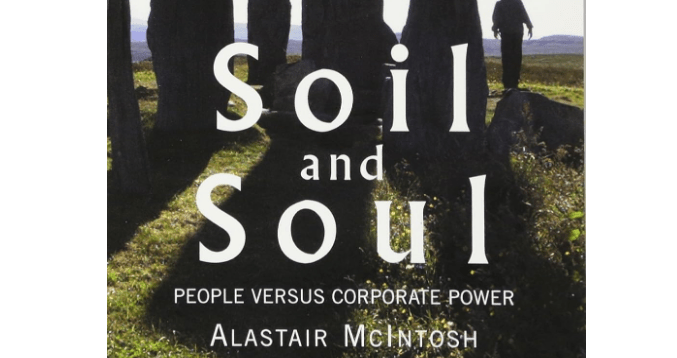
I therefore found it amusing while reading Alastair Mclintock’s wonderful book, ‘Soil and Soul‘. In the chapter on Celtic Ecology, he tells of a priest ‘Dara’ on the Isle of Lewis who says that “community conflicts do take place, but the majority of these get pushed aside or are forgiven out of necessity the next time a common task arises or at an island dance. The structures of certain Irish dances make it impossible not to come face to face with everybody else on the floor at some time in the evening. Then it’s harder to maintain a feud after you’ve been dancing together!”
Brilliant, rather than go for control, rules and regulations (which are unnatural in a complex system) their society has built into its culture and rituals a natural way to diffuse and dissolve disputes and boundaries between individuals.
I really wish I had read this book earlier for the definition of ‘ecology’ he prefers is that of Victor Shelford – the american zoologist and animal ecologist who defined it as “the science of communities”. Now that works very well with my thinking around ‘knowledge ecology’ and would have helped my argument greatly when all the scientists in English Nature disowned me for sullying the purity of the term.

 Narrative Ecology - Blog of Ron Donaldson - fACILITATOR, TRAINER AND COACH
Leave a comment