
I am currently on the train having delivered a really interesting and hugely fulfilling archetype extraction workshop. Client privacy means that unfortunately I cannot share the amazing cartoons that the attendees described for my new best friend Terry of Cartoonology to draw.
The process I took them through was standard Cognitive Edge methods:
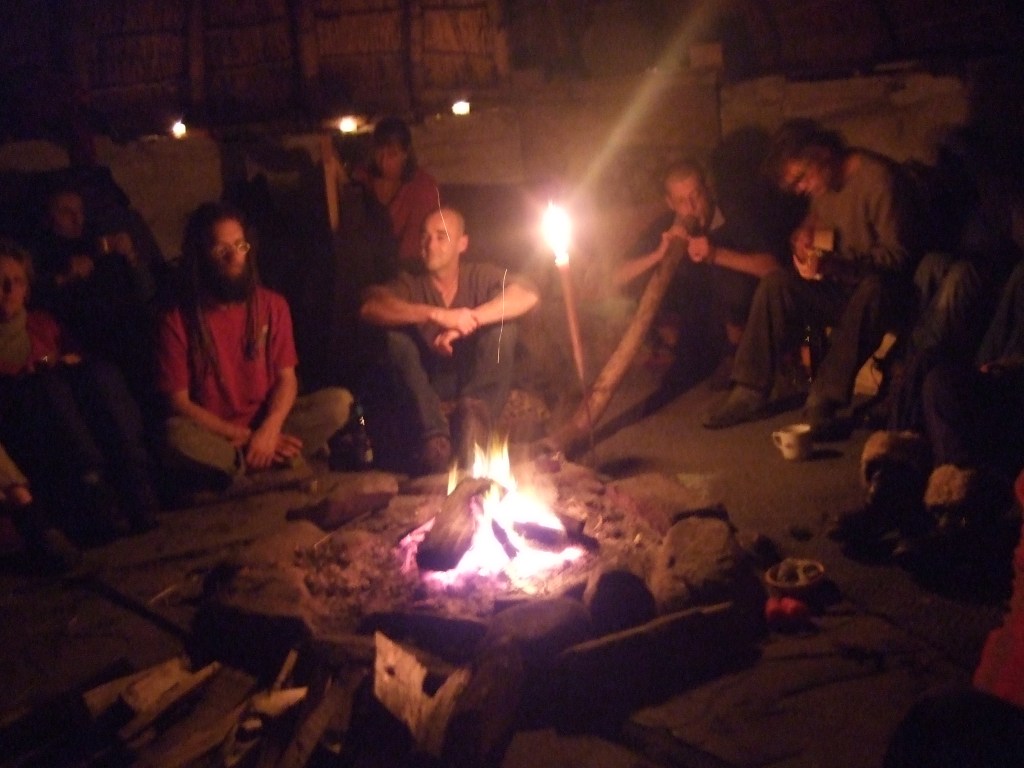
- Anecdote circle – to ground the topic in personal experiences and give context to the rest of the workshop
- Archetypal themes – which emerged from patterns identified in the material produced
- Future backwards – Split into two groups, again grounding but putting into words their hopes and fears as heaven and hell.
- Revealing perpectives – simply by allowing them to tell the story of their future backwards back to the other group.
- Archetypal characters – which emerged from identifying characters, their characteristics then the patterns therein.
- Finally Terry drew the archetypes live from the descriptions and prompts given.
Even I was amazed at the richness and quantity of material produced. The use of ambiguity in the instructions, self organisation of the groups and totally facilitator independent emergence of outputs still fascinates me and is both difficult and easy (at the same time) to deliver.
Making sense by interpreting meaning within the material is as wide as it is long.
Are we looking at the minds of the attendees or the topic being studied? Just looking at how the thinking process occurred could be a complete PhD.
Did the first anecdote, pattern the rest?
Did my inadvertent mention of Homer Simpson as an archetype (challenged immediately as an example of a stereotypical American) change the outcome? [incidentally if you wikipedia stereotypes and archetypes you find that Harry Potter is an archetypal hero portrayed in a stereotypical way in the movie]
Will a subsequent similar exercise in three months time with different attendees show a change in a) the topic, b) the attendees, or c) my more confident facilitation?
I don’t have any answers for these questions but I do know that this feels a much better way to make sense of a topic than using output based measures, questionnaires and opinionated expert review.



 Narrative Ecology - Blog of Ron Donaldson - fACILITATOR, TRAINER AND COACH
Leave a comment