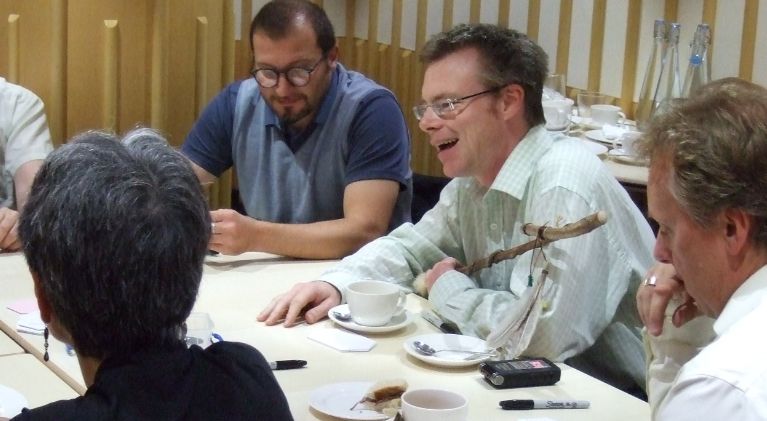
Three weeks ago I ran two workshops at the British Library for my friend and fellow Cognitive Edge practitioner Elizabeth who is doing her PHD thesis on Continued Communication. We have succesfully co-run a few future backwards sessions but this was to be much more interesting and enjoyable.
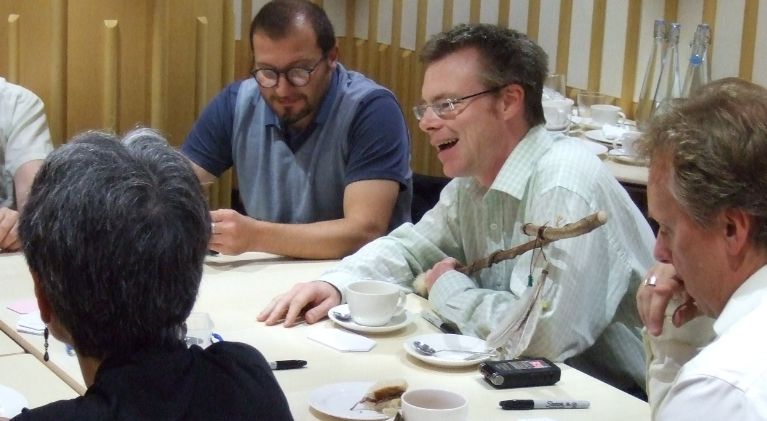
Firstly, just to wind up any Cognitive Edge purists I brought along my genuine talking stick, carved by my friend Kevin who is now living in Swedish Lapland as a mountain guide. The stick is modelled here by James Lappin.
The topic was ‘records management’ and all it entails. Anecdotes of all perspectives, positive and negative experiences were encouraged and a table full of hexagons quickly emerged.
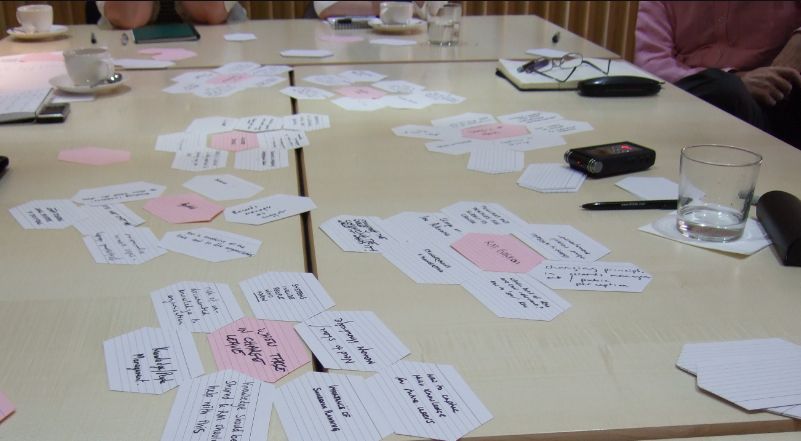
They then looked for patterns in the material and what emerged was an interesting collection of ‘archetypal themes’.
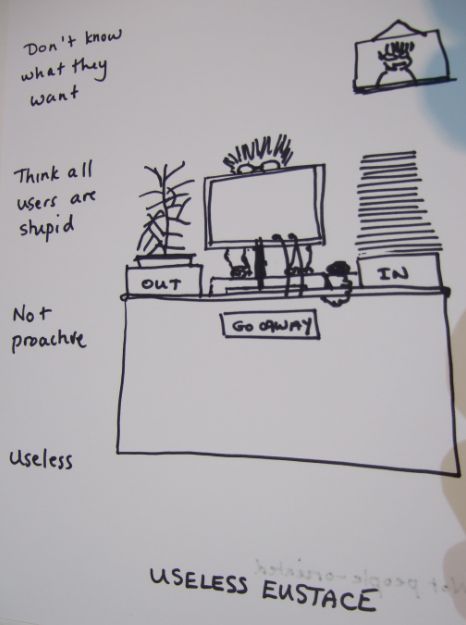
At great speed (which I have this week discovered is the best way to reduce the natural tendancy to censor your thoughts) they then identified the characters mentioned in the anecdotes and wrote down their characteristics. Patterning these hexagons gave them the building blocks to draw and name archetypal characters, see ‘Useless Eustace’ to the left.
These archetypes can then be used in various ways eg for teaching or even decision making, without offending real-life individuals. Even with the groups expressing concern at their ‘limited drawing skills’, I thought they did a brilliant job.
For a final flourish, I got the group to self analyse the current and desired levels 0 – 5 against each of the emergent themes and thereby give an instant visualisation of the current state of Records Management (according to those in the room) a la ‘river diagram’ mentioned in a previous posting.
The exciting outcome of this quite rapid series of techniques was the theming and numbering of the anecdotes gave really useful contextualised material for a book, project, thesis – with each theme as chapter or project-stage. The anecdotes, identified by numbers on the reverse of the hexagons would add great narrative based support to these as we had already road-tested the reactions listeners perceive. [Self signification of future anecdotes against these themes would make a great SenseMaker project]
All in all a most enjoyable day out, the second, evening workshop benefitted from ironing out all the erroneous instructions and better timing, reminding me that you can never get too much experience facilitating. It is the uncertainties that crop up during the proceedings (yes James you were one) that make it so much fun and keep you on your toes.



 Narrative Ecology - Blog of Ron Donaldson - fACILITATOR, TRAINER AND COACH
Leave a comment