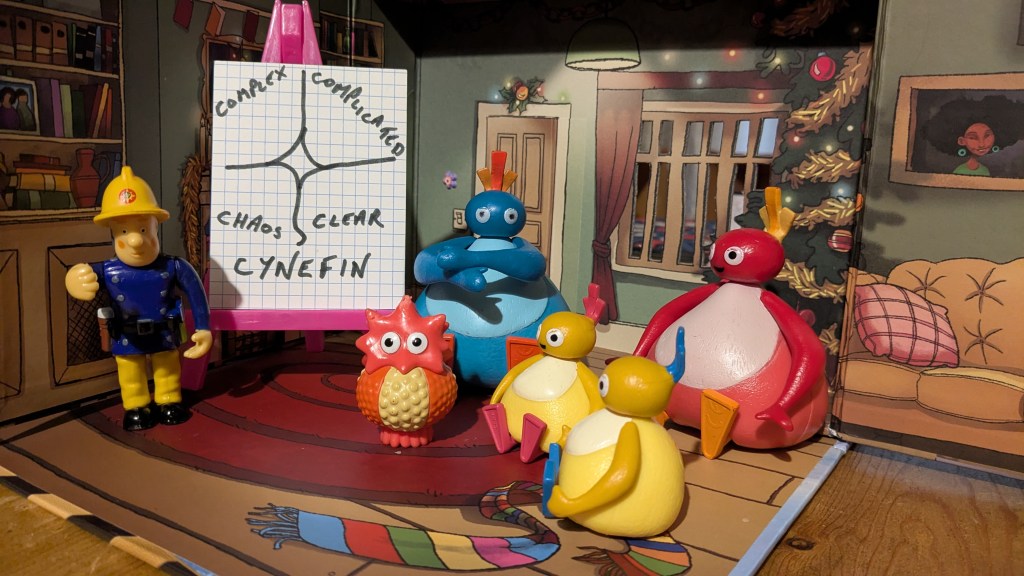
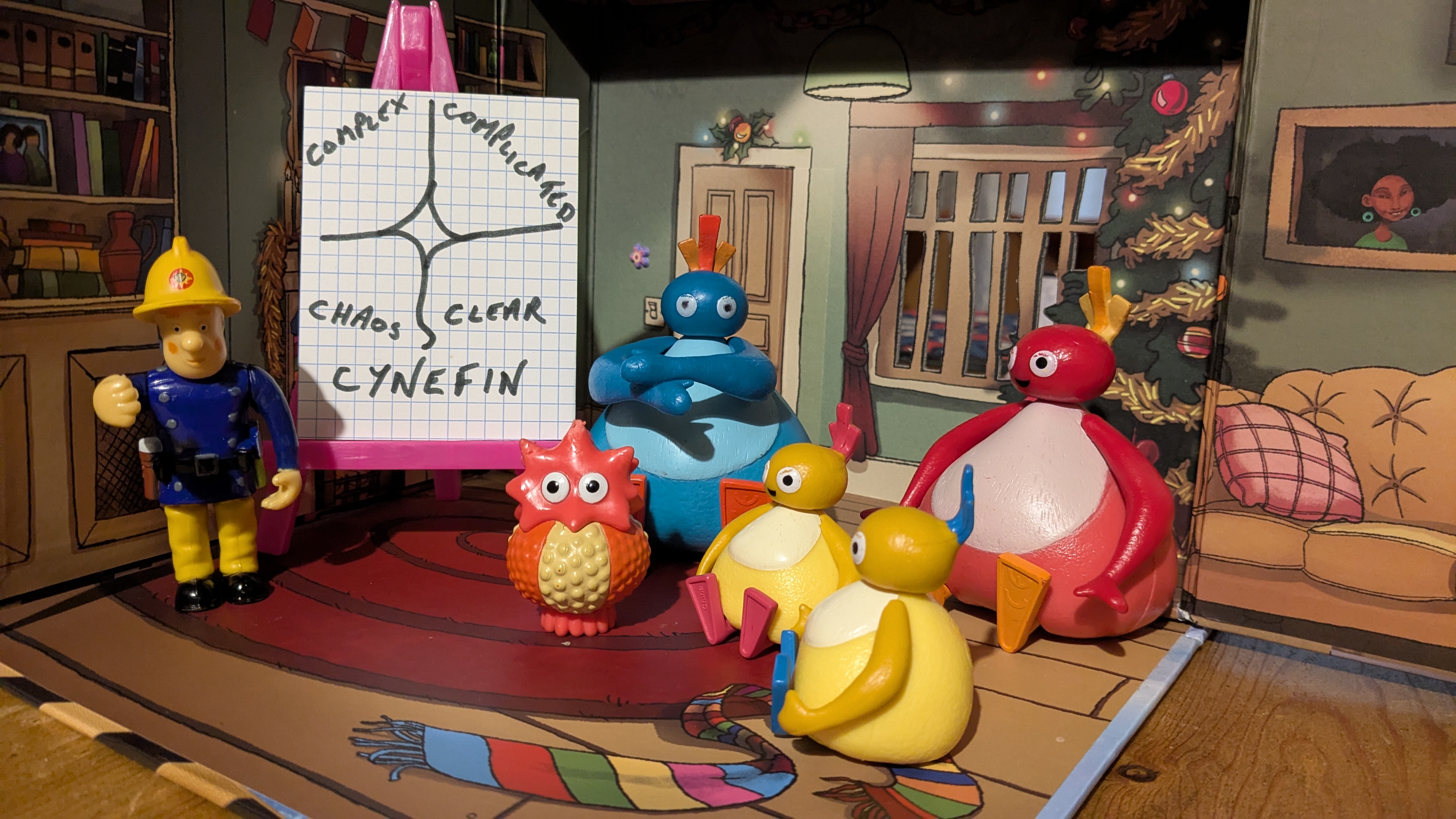
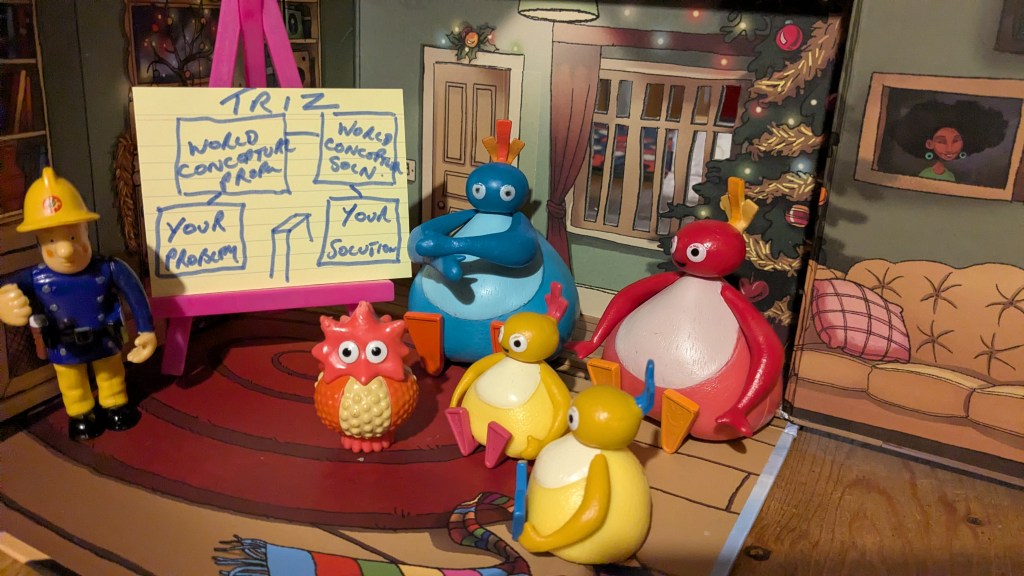
The occupants of the big red boat settle down for a telling of Dave’s Children’s Party story to explain each of the Cynefin domains. As Sam is Welsh he has no bother pronouncing it as ‘cunevin’ and seems happy that their is no obvious English equivalent word.
This is part one of twelve posts before Christmas reflecting on the components, tools and principles that I am most interested in, have found most useful, and make up my narrative ecologist identity. Where better to start than the framework underpinning the reasons we use narrative to explore and make sense of systems, issues and groups.
On the ordered right hand side (Clear and Complicated) are all the traditional tools that I started my career using. Systems Analysis, Data Flow diagrams, Business Process Re-engineering, Root cause analysis – all intended to find the one, or most likely to succeed solution. In the Complex domain where things are unpredictable, patterns rarely repeat, these tools are genuinely dangerous and wrong. What we should be doing is acting like Anthropologists, working with stories, looking for patterns to make sense of what is going on.
This work emerged from the needs of Knowledge Management which was much more complex than the complicated Data and Information Management that came before it. I still enjoy running Knowledge Footprint workshops for Oxford Creativity where I help (mostly) retirees share their knowledge just before they leave. I do this using a combination of Anecdote Circles, Future Backwards and Decision Analysis and it is always surprising that there is so much knowledge still to learn that no-one was aware of. One poor retiree had to delay his retirement indefinitely because I helped reveal just how important his knowledge was.
This importance of knowledge in narrative form is very apparent over at NASA where their knowledge base is made up of many story based depositories.
The cynefin framework always had that central fifth domain which for years only Dave could explain. It was always the first question after a slideshow that included it. Dave used to says it was the equivalent of the undead, like a vampire, but I could not for the life of me understand why or how that fitted in. Nowadays it is best explained as the domain you are in if you don’t know which other domain applies. It is often split into a further part named aporia which the dictionary defines as ‘a state of puzzlement characterized by an expression of doubt, uncertainty or perplexity’. So now you can handle that question.
Perhaps the biggest insight and how I use cynefin as a lens to understand stuff is that people see and understand things from their preferred domain. Engineers tend to see things from the ordered right hand side. Social workers and nurses from the left.
It was a big shock to me that ecologists also tend to see things from the ordered right hand side, they shouldn’t, as the definition of ecology is perfect for someone who inhabits the complex domain, but they are trained primarily in Biology, Geology, Chemistry, Species identification, classification systems – this is the one right answer.
Dave has recently produced a full infographic of all the tweaks to cynefin that have been made over the years (I cant find the link). I quite like the idea that you can cynefin-date a paper, presentation or post by the shape and domain names of cynefin.
I still love Dave’s ‘Butterfly that stamped‘ exercise that gave everyone a collection of ‘systems/things’ that had to be distributed into the domain you thought most appropriate. No one realised that they had been selected to produce a very even spread (like the shape of a butterfly) and the bias of their perspectives was very interesting, and telling.
A final reflection on the importance of contextualising your own cynefin framework. This is done by placing materials, often created during a future backwards exercise into the appropriate domains’ It triples up as a great way to make sense of what you did/do so that you realise the importance of complexity, helps you diagnose the appropriate response for what you might do next (take action, safe to fail experiments, projects/experts or checklists) and provides personal examples as context for you and others to better understand cynefin.
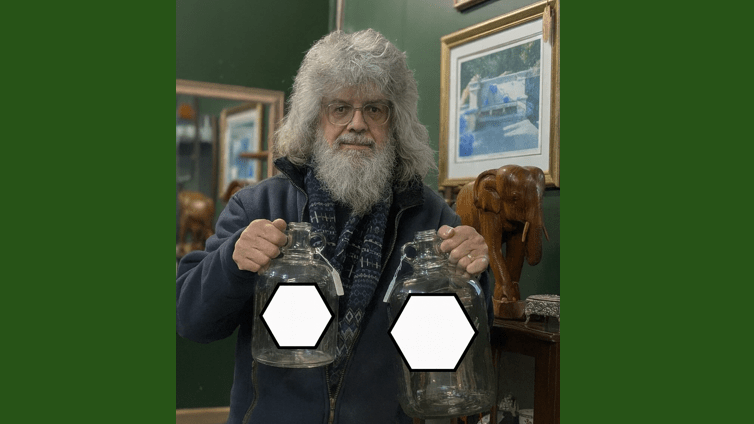
I notoriously did this once at a long weekend sandpit for the girl guides and associated charitable groups in which I gave them a long piece of string and pegs and asked them to sort and attach their hexxies in order of predictability. This became my ‘Washing line of predictability’ which can be laid down on a big sheet and the cynefin framework emerges from the content, not simply categorised as you might be tempted to do.
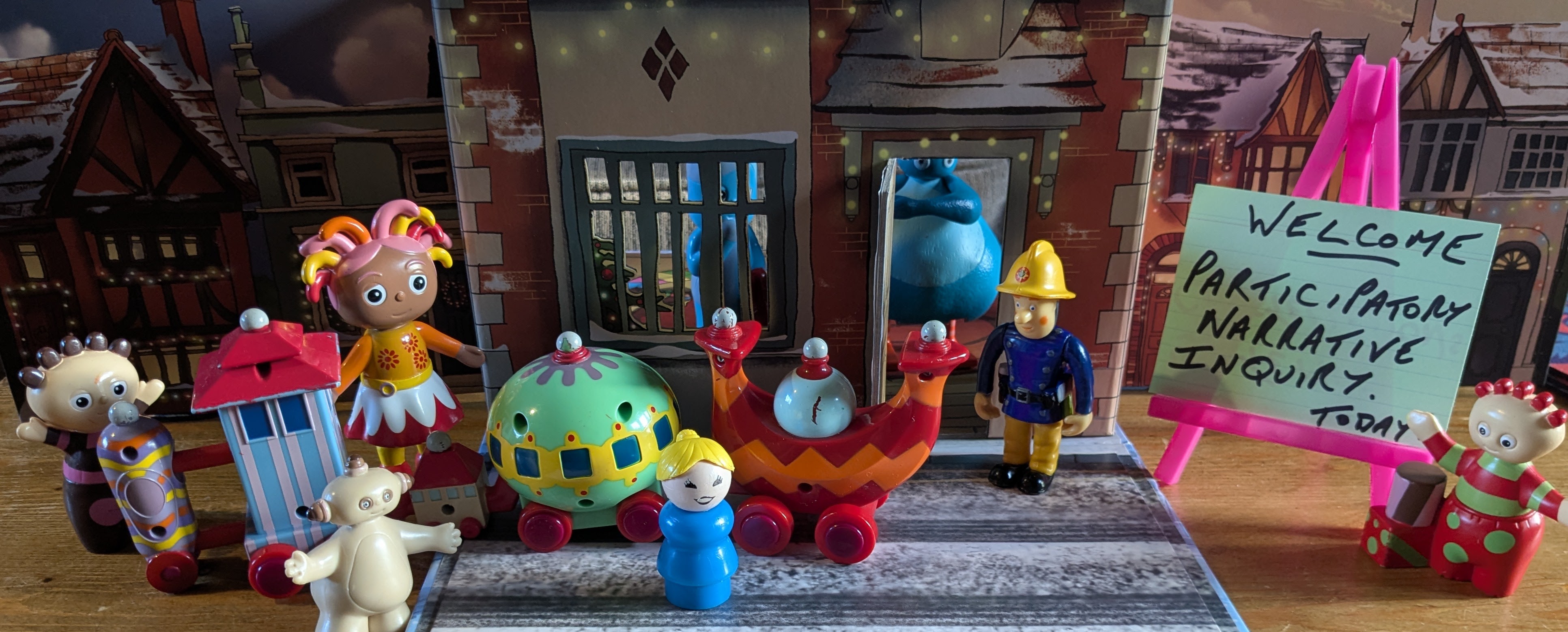
Part two should appear on Wednesday when I look back on the powerful approach that is PNI (Participatory Narrative Inquiry).
2026 will be the beginning of the end for me (like Whitesnake, the Who and Black Sabbath, the band Europe have called theirs the Final Countdown) hopefully with a series of workshops with friends and colleagues I have worked with over the years. Please get in touch if you are interested or would like one final workshop or training session.


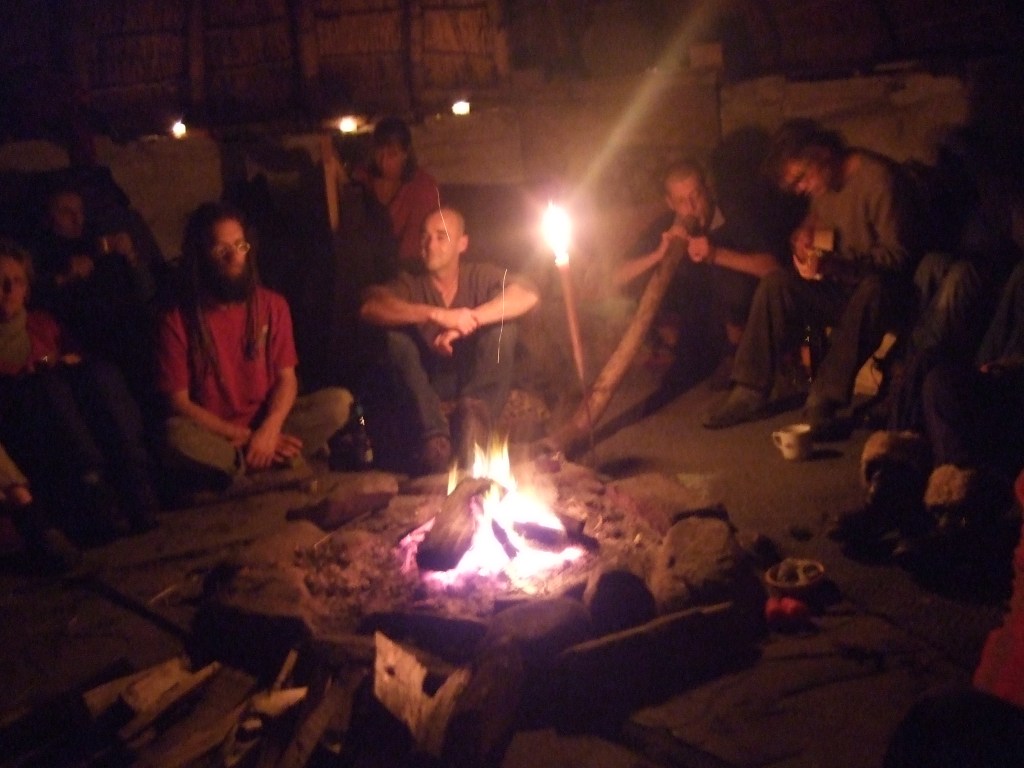
 Narrative Ecology - Blog of Ron Donaldson - fACILITATOR, TRAINER AND COACH
Leave a reply to rondon Cancel reply