July 12 2027 – The story of Werrington Fields
My attempt at running a Narrative Inquiry by interviewing and engaging with ChatGPT as a proxy for all the bodies involved. Start with the podcast for a comprehensive overview. The main report is now 69 pages long and includes detailed AI-assisted analysis of the key decision, public objections, the lease and community access agreement.

Main Report: Available free to download – Click Here
Summary Report: as an Audio Podcast (17 mins running time, auto generated – apologies for US accents)
Appendix 1. Analysis of S123 Objections
Appendix 2. Analysis of Written Representations
Recommendations emerging from this Report
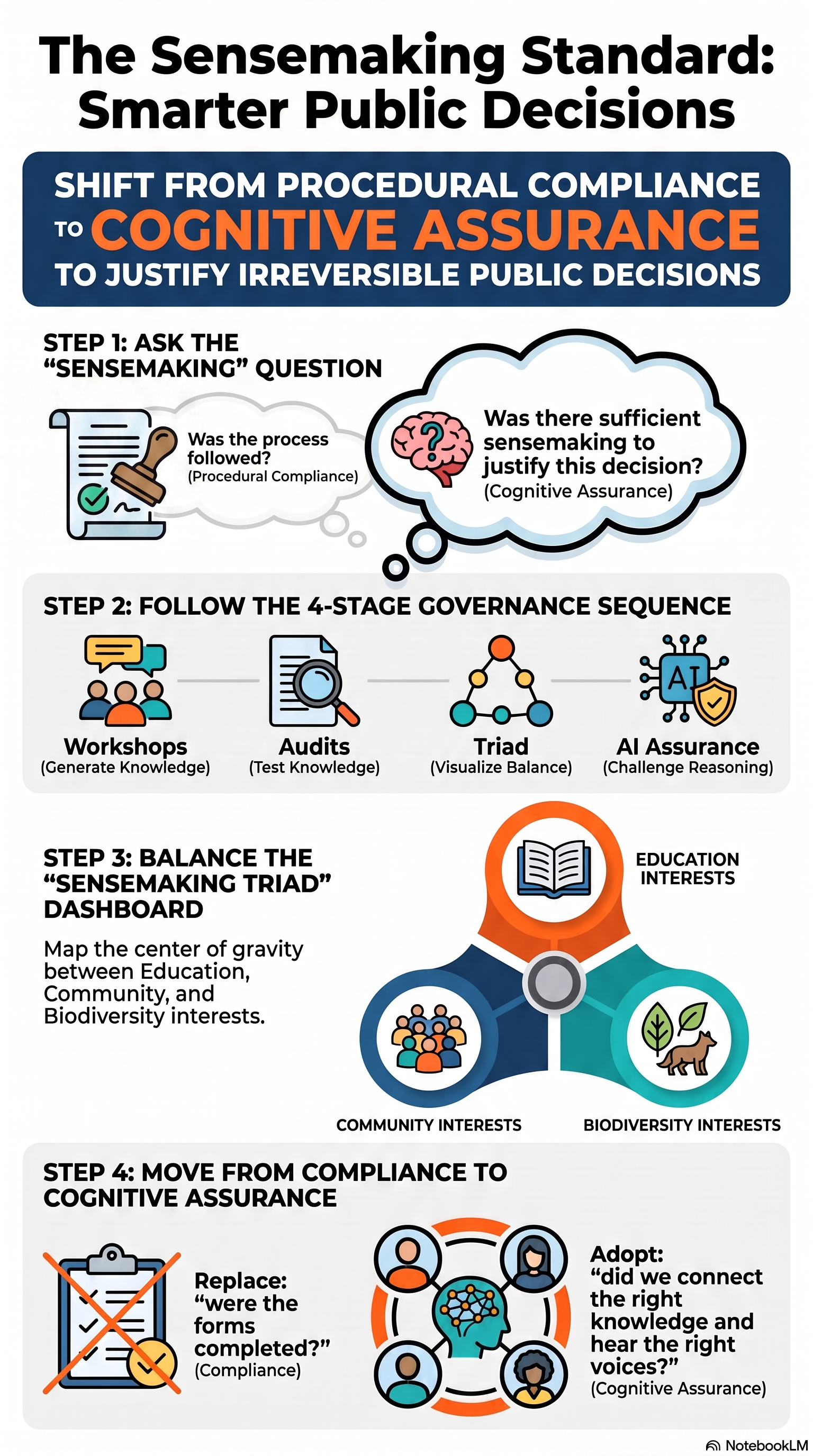
Proposal 1. Proposal for a Public Assurance Framework
Example 1. Using Framework to make sense of this story
Proposal 2. A Knowledge Audit for key decisions
Proposal 3 Running a Participatory workshop
Executive Summary
This report presents the Werrington Fields case study as an opportunity to examine how public bodies balance three legitimate public interests: education, community, and biodiversity. Rather than focusing on the specifics of one local decision, it explores the wider lessons for governance, decision-making and implementation of England’s Local Nature Recovery Strategies (LNRS).
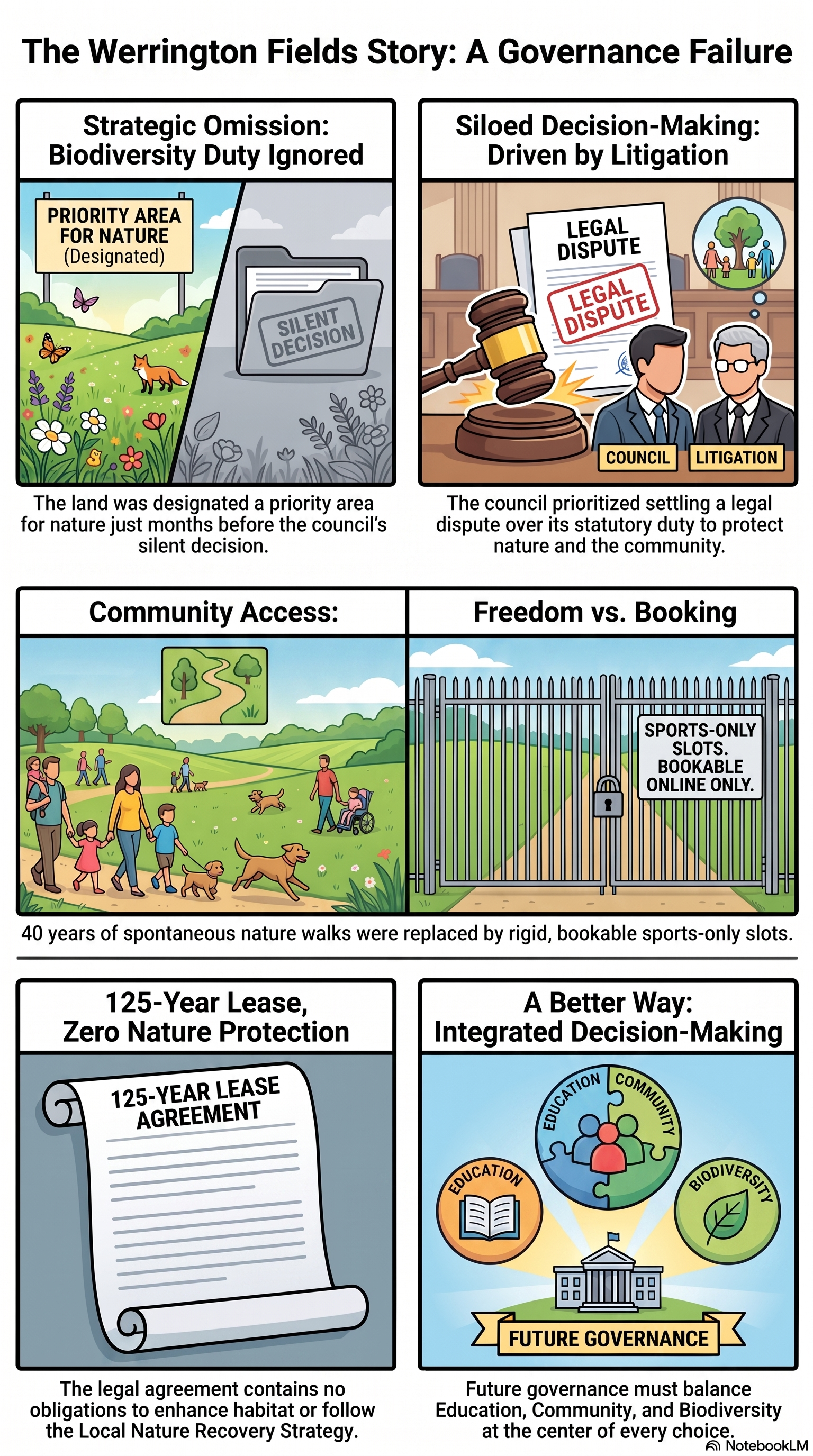
The case centres on the recent leasing and fencing of approximately five hectares of public open space at Werrington Fields, Peterborough. The land lies within an area identified by the Cambridgeshire & Peterborough Local Nature Recovery Strategy as an Area that Could Become of Particular Importance for Biodiversity (ACB). The report examines the planning, governance and engagement processes surrounding the decision, drawing on publicly available documents, legislation, policy, Freedom of Information responses and direct observations.
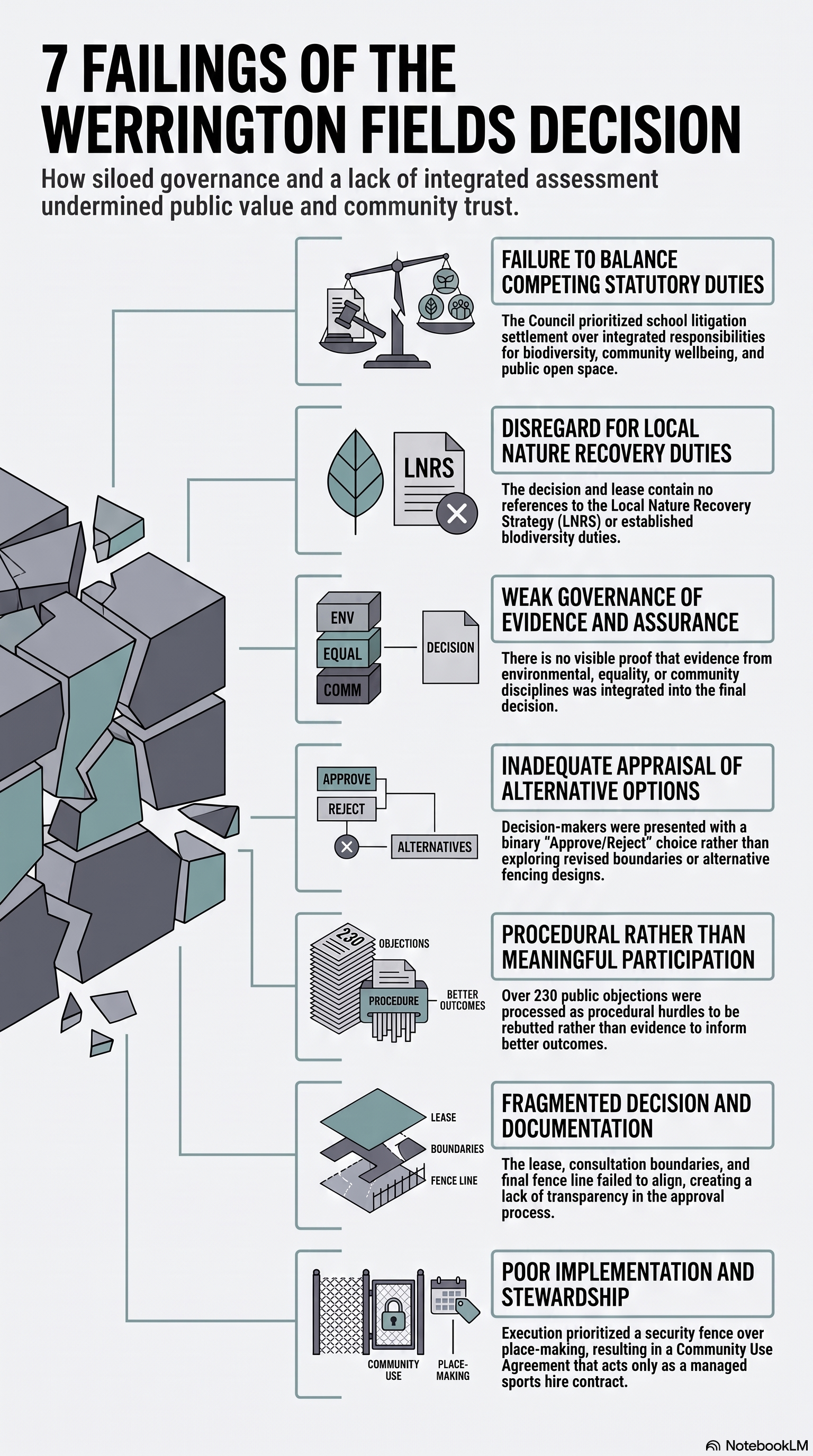
The evidence suggests that the outcome was shaped by a series of disconnected decisions rather than an integrated assessment of multiple public objectives. While the educational requirements of the school were prioritised, opportunities to achieve positive outcomes simultaneously for biodiversity, public access, community wellbeing and long-term place-making appear to have been overlooked. The report does not question the importance of school safety or educational provision; instead, it questions whether these objectives needed to be achieved at the expense of wider public value.
The report identifies broader systemic issues relevant to local authorities across England. These include the practical integration of Local Nature Recovery Strategies into decision-making, transparency and public participation, cross-departmental working, consideration of alternative solutions, and the challenge of balancing competing statutory responsibilities. It also highlights the growing need for decision-making frameworks capable of addressing complex environmental and social systems rather than treating individual issues in isolation.
Rather than assigning blame, the report offers constructive recommendations. It proposes a more integrated approach that places Education, Community and Biodiversity at the centre of future decisions, supported by earlier stakeholder engagement, ecological assessment, transparent option appraisal and collaborative design. Drawing on systems thinking, participatory methods and innovation frameworks, it demonstrates how many apparent conflicts can be reframed into opportunities that deliver multiple public benefits.
Although based on a single case, the lessons have wider significance. As Local Nature Recovery Strategies become increasingly influential in shaping land management and planning decisions, public bodies will require practical approaches that reconcile environmental recovery with community needs and public service delivery. This report is intended as a contribution to that learning process and as a resource for local authorities, policymakers, environmental organisations and educational institutions seeking to improve how such decisions are made in the future.