
From imagining possibilities to working with what is already possible.
After more than 25 years working with Cynefin and being guided by Dave Snowden, I have become increasingly suspicious of the idea that our job is to find the answer. That sounds obvious, but it changes quite a lot. In complex situations, we don’t have a stable relationship between cause and effect. We can’t reliably predict what will happen when we intervene. And the more we try to impose a predetermined future, the more likely we are to mistake our model of the world for the world itself.
[This is a redrafted Field Note #4 after I learned a valuable lesson from AI and in particular ChatGPT which I use to help me create these field notes. As an application it only has a limited space for memory and after a while allows the gist of your conversation to dissipate and I have found it then goes back to its much wider large language model and gives you the answers and ideas which everyone else thinks. I am certainly not interested in what everyone else thinks, I want to be on the frontier of thinking and in order to do that you need to guide AI much tighter. So, my last Field Note #4 is now scrapped and this one takes its place, representing far more excitingly the new world of anthro-complexity, participatory narrative inquiry and narrative ecology.]
[Thanks for reading Ron Donaldson – Field Notes of a Narrative Ecologist! This is a parallel post of my articles on Substack.]
So I have been thinking again about what I mean by a possibility landscape. It isn’t primarily a landscape of ideas. It is a landscape of what might become possible from where we are now.
That distinction matters.
Start with the disposition
Before asking Where do we want to go?, I now ask: What is the disposition of the landscape now? What are people, organisations, technologies, relationships, resources and constraints already disposed to do?
Some things are easy. Some things are difficult. Some things are almost impossible. And some things are beginning to become possible without anybody having deliberately planned them.
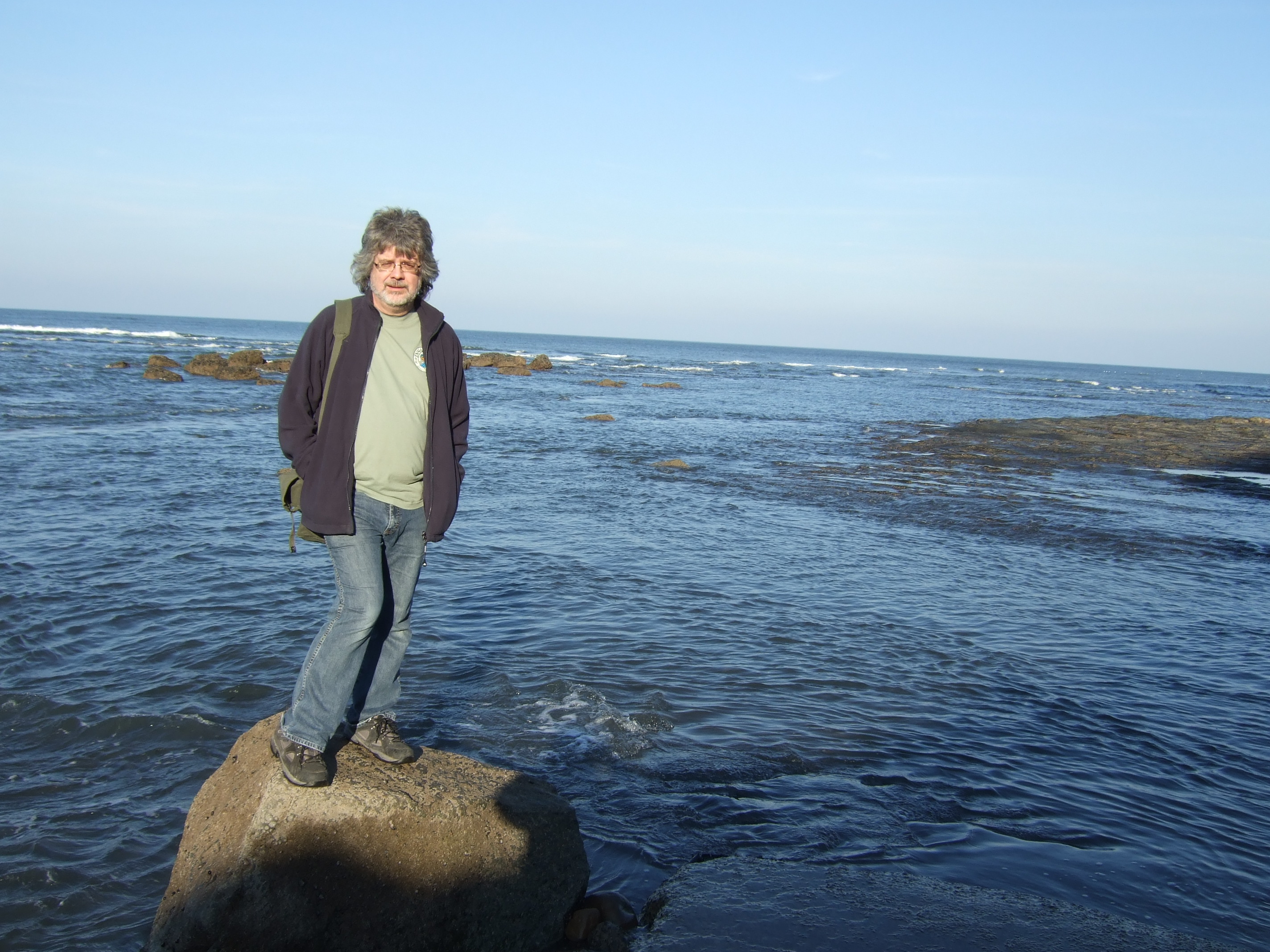
This is the thick present: the present isn’t a single point between the past and the future. It contains traces of the past, tendencies towards the future and relationships that may suddenly become significant. It reminds me of being on the beach at Whitby, my favourite liminal place.
The question is therefore not: What future do we want to create? It is:
Given where we are, what direction might we be able to move in?
That is a very different starting point.
Follow a vector, not a goal
Goals assume that we can describe the destination sufficiently well to plan our route towards it. Vectors are different. A vector gives us a direction without pretending that we know the final destination.
We might know that we want:
- more diversity
- greater resilience
- more agency
- better connection
- less fragility
- greater ecological health
- more room for experimentation
But we don’t necessarily know what the resulting landscape will look like. Nor should we. In complexity, the future is not something waiting for us to discover it. It is something that emerges as we move.
So rather than defining the perfect future, We are interested in finding the next adjacent possible. Not the impossible leap. Not the ten-year masterplan. The next move that is close enough to the present to become real, but different enough to open another possibility.
Adjacent possibles become stepping stones through the landscape.
Affordances: what the landscape is offering
This recent addition by Dave Snowden is where my ecology instincts really kicked in and I became obsessed with affordances. I love the idea that they are places where the environment invites you to act.
An affordance is an opportunity for action that exists because of the relationship between an actor and its environment.
A fallen tree affords shelter.
A gap in a hedge affords passage.
A conversation affords a relationship.
A new technology may afford a completely different way of organising work.
A change in regulation may suddenly afford something that was previously impractical.
The important thing is that affordances are contextual. The same landscape affords different things to different actors. And what is possible today may not have been possible yesterday.
So we look for change happening along existing affordances.
Rather than asking: How do we change the organisation? We ask: Where is the organisation already changing, and what is making that change possible?
Then:
Can we strengthen that affordance?
That is a much lighter touch. We aren’t necessarily pushing the system towards something. We are noticing where it is already moving and seeing whether we can help.
And then there are disaffordances
I find this equally interesting. quite a few years ago i became disillusioned with the idea of mapping Hell, the place where everything that can go wrong does go wrong. Disaffordances have me retracing my steps. Sometimes the most useful intervention isn’t creating an opportunity. It is removing something that prevents an opportunity from being taken.
A disaffordance is something about the environment that makes an action difficult, unattractive or impossible. It might be:
- a rule
- a habit
- a physical barrier
- a permission process
- an assumption
- a relationship
- a legacy technology
- a funding mechanism
- a measurement system
- simply the way something has always been described.
So rather than asking only: What should we introduce? We now also ask:
What is getting in the way?
And then:
- Can we avoid it?
- Can we remove it?
- Can we weaken it?
- Can we route around it?
- Can we block its effects?
- Can we stop reinforcing it?
This is one of the reasons I increasingly think of strategy less as designing the future and more as changing the conditions under which futures can emerge.
Safe-to-fail, rather than fail-safe
This leads naturally to experimentation. In a complicated situation we might try to design something that will work. In a complex situation I would rather get a group to design something that is safe to fail. That means small interventions where failure is survivable, observable and useful.
We don’t ask: Will this work? We ask:
What might happen if we try this?
And ideally we don’t run just one experiment. We run a small portfolio of different probes. Some may fail. Some may produce nothing interesting. Some may produce an unexpected effect. And occasionally one will reveal something that we could not have predicted.
That is the point.
The purpose of a safe-to-fail experiment isn’t simply to test an idea. It is to learn something about the landscape.
Probe – Sense – Respond – Repeat (which, given my ex DJ background, I think would make a great t-shirt)
That is fundamentally different from implementing a solution and measuring whether it delivered the promised outcome.
Energy and time
This is where I find Dave’s Estuarine Mapping particularly powerful. Think about landscapes as an ecologist would think about an estuary. Things move. Things become exposed. Things disappear beneath the water. Some structures are remarkably stable. Others shift with every tide. And crucially, timing matters.
There are things you can do today that you cannot do tomorrow. There are opportunities that require very little energy now but will become extraordinarily expensive later. There are other changes that look impossible until the conditions shift.
So I then ask two simple questions of any possible intervention:
How much energy will it take? and How long will it take?
The Estuarine Framework explicitly treats strategy in terms of energy and time, working from the present disposition rather than beginning with an abstract desired future. That feels much closer to ecology than traditional strategic planning does.
Hypermutation
And this is where I still retain something from my earlier work. For almost twenty years I have used TRIZ, provocations and other techniques to deliberately disrupt people’s thinking. They work. But I now see them differently.
They aren’t the practice. They are one possible way of generating variation.
Since reading the recent Anna Panagiotou article on the Cynefin Co, what interests me more now is hypermutation. In biology, mutation creates variation. Most mutations don’t amount to much. Some are harmful. Occasionally one produces a variation that changes what is possible. I think the same thing happens with ideas.
We need enough variation in the possibility space for something genuinely different to appear. But I don’t want to spend my time teaching people a collection of clever provocations. I want to change the conditions in which new patterns can emerge.
That might come from:
- a different person entering the conversation
- an unexpected story
- an observation from another discipline
- a change in scale
- a change in timing
- a new connection
- a small experiment
- removing a constraint
- introducing a new constraint
- deliberately looking somewhere nobody normally looks.
The important thing is not the technique. It is the mutation of the landscape of possibilities.
A new pair of eyes
I have had a rather literal reminder of this earlier this week. After my cataract surgery, I discovered that I hadn’t simply been looking through a cloudy lens. I had been living in a world that I had gradually stopped noticing was cloudy.
Suddenly things were brighter, sharper and more colourful. It was a surprisingly profound experience. The paint in the bathroom isn’t yellowing with age at all. It is now a vibrant fresh white. It was just me looking through a tea stained lens that made it look yellowing.
And it gave me a useful metaphor for working with organisations. Sometimes we don’t need another idea. We need another pair of eyes. Someone who sees the same landscape but doesn’t yet share all the assumptions that have accumulated around it.
Someone who asks:
Why is that there?
What happens if we don’t do that?
Why does everybody think that is impossible?
What are you not noticing because it has become normal?
This is one reason I value different perspectives so highly.
Difference isn’t simply useful because it gives us more opinions. It can reveal affordances and disaffordances that have become invisible to the people who live inside the landscape, making the invisible visible.
And, it doesn’t just have to be someone new, just the right question can open up new ways of viewing things. this is especially true of the 40 principles of TRIZ which will no doubt be the subject of later field notes.
The possibility space is alive
So I no longer think of the possibility landscape as a place where we generate lots of ideas before choosing the best one. It is more like an ecology of potential.
The landscape contains:
- current dispositions
- affordances
- disaffordances
- constraints
- energy gradients
- temporal opportunities
- emerging patterns
- adjacent possibles
- and places where a small intervention might produce a disproportionately large change.
Mapping helps us see some of this. But the map isn’t the landscape. In complexity, mapping is useful precisely because it helps us become more attuned to where we should look and what might be worth probing.
Then we act, and acting changes the landscape. Which means we map again.
The practice
For me, My practice is becoming something much simpler:
Notice. What is already happening?
Sense. What is the current disposition?
Find affordances. Where is movement already possible?
Find disaffordances. What is making movement difficult?
Probe. What small intervention could teach us something?
Sense again. What changed?
Respond. Amplify what appears useful. Dampen what doesn’t. Change direction if necessary.
And then do it again. Not because we have failed to find the answer. But because the landscape itself is changing as we move through it.
That is the possibility landscape I am interested in now. Not a bigger space for imagining solutions. A richer space for discovering what might become possible next.
Thanks for reading Ron Donaldson – Field Notes of a Narrative Ecologist!




Leave a comment