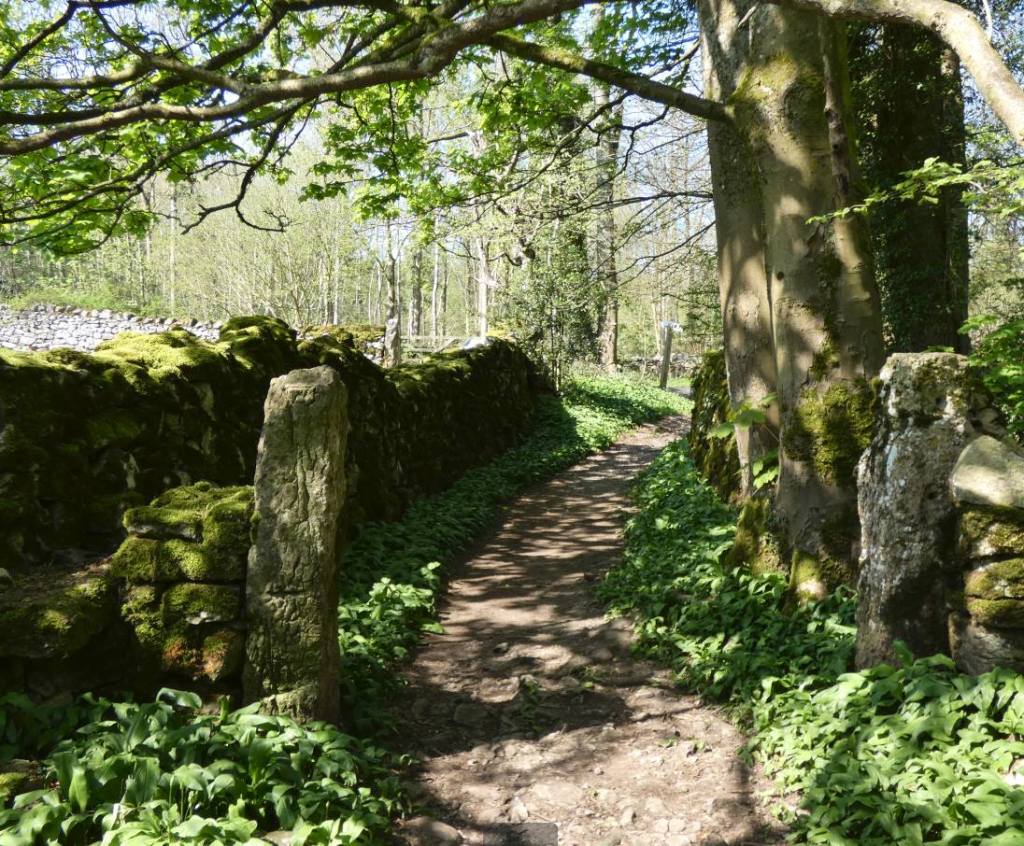
Who Makes the Path?
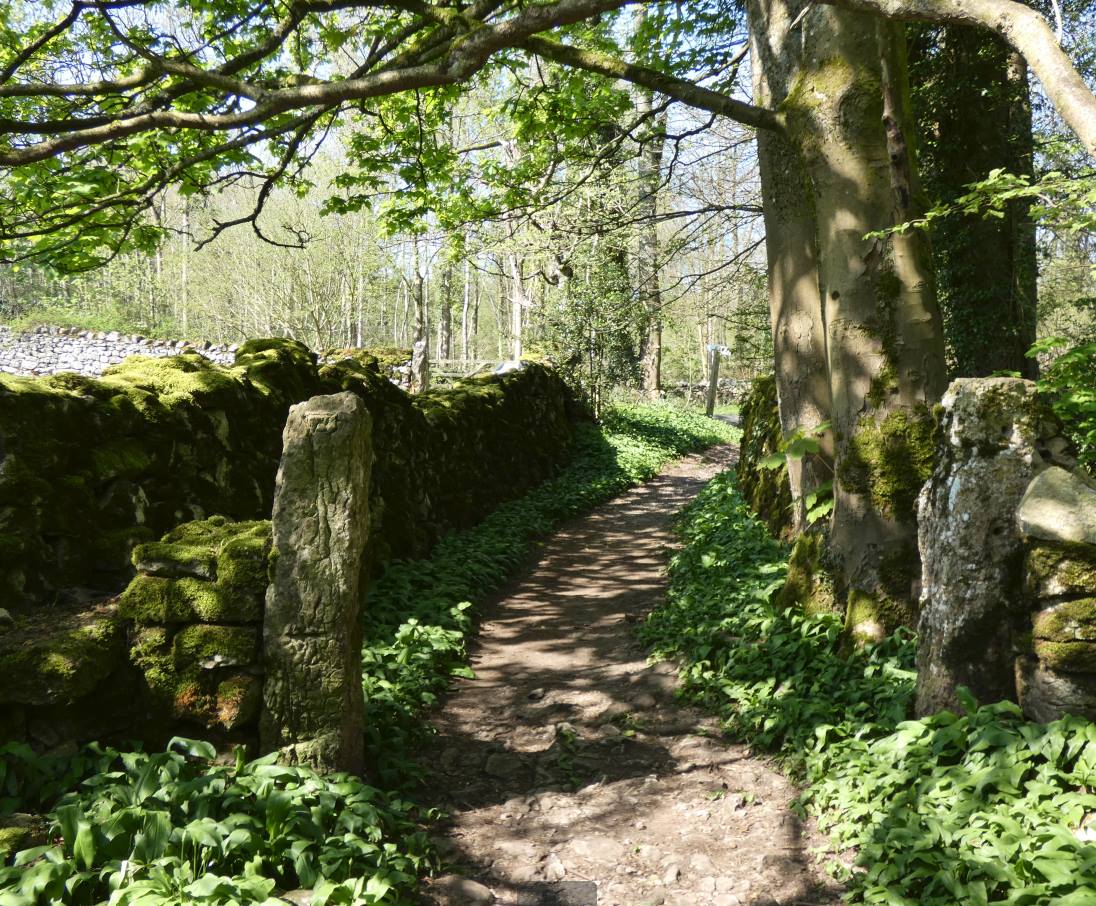
As I started writing these articles on SubChat I also started to delve into some of the other writers who have collected there and found some very insightful writing.
I had been thinking about paths. Not just the paths we find across landscapes, but the paths that appear between people, ideas and possibilities. Until recently I might have described these as narrative pathways: one person’s story prompts another, which changes how the group sees a situation, which makes another story possible.
I’ve just discovered this post and the idea that change along affordances might themselves reinforce or produce new marks or affordances sounds excitingly new but familiar in its own strange way. I have now found a rather more precise word for the phenomenon: stigmergy.
The word comes from the study of social insects. A termite changes its environment by placing a grain of material somewhere. That alteration becomes a cue for another termite. Its action produces another alteration. The accumulated traces eventually become a structure.
Ants do something similar with trails. One ant leaves a chemical trace. Other ants respond to it. Their movement reinforces the trace. The route consequently becomes increasingly likely to be followed.
The remarkable thing is that nobody has designed the path. The path emerges from the traces of previous action. This made me wonder whether something similar happens with stories. Perhaps a story can be understood as a kind of social trace.
Someone tells us something they have experienced. We cannot unknow it. The story has altered the environment in which we think. It may make us notice something we had previously ignored. That new perception may prompt an action. The action leaves another trace. Someone else encounters that trace and responds.
Story → perception → action → trace → perception → action.
A narrative ecology might therefore be less like a collection of stories and more like a landscape of traces. Some traces disappear. Some are ignored. Some become stronger through repetition and occasionally a trace becomes an affordance: something that makes a previously unimaginable action seem possible.
This suggests a different way of thinking about my role as a narrative ecologist. Perhaps I am not primarily trying to find the right story. Perhaps I am trying to create the conditions in which useful traces can encounter one another.
A question can be a trace.
A photograph can be a trace.
A remembered story can be a trace.
A map can be a trace.
A child’s observation can be a trace.
An archaeological fragment can be a trace.
A field note can be a trace.
And the important question becomes: What might this trace make possible? That is where narrative becomes ecological. A story does not simply describe a landscape. It can change the landscape of possible action.
And perhaps the most interesting interventions are not those that tell people what to do, but those that leave behind a trace from which the next person can discover something worth doing.
The path is not laid down in advance. It is made by walking.
In the article Heylighen’s formulation is wonderfully spare: an action changes a shared environment; the resulting trace stimulates a subsequent action; that action leaves another trace, and so on. The intelligence is therefore not necessarily inside any one person—it can emerge through the interaction between people and a changing environment.
Pushing that one step further for my purposes: A narrative is not only something we tell about what happened. It can become a trace in the environment that changes what becomes possible next. That, I think, is where it becomes Narrative Ecology.
Stories are not simply representations of reality. They are things that move through a system and change the system. Stigmergy gives me a mechanism for explaining how.
Think of this sequence:
experience → story → trace → perception → action → new trace → new affordance → new story
The crucial thing is that the story doesn’t have to persuade somebody directly. It can simply alter the landscape in which the next person acts.
A photograph pinned to a wall.
A field note.
A map with someone’s annotation.
A child’s observation.
A story told in a workshop.
A path worn through grass.
A monument.
A name given to a place.
A question written on a Post-it.
A Wikipedia edit.
A poem.
Even an archaeological fragment.
Each is a trace. And traces can become affordances.
The really exciting bit: affordances can be produced by action
An affordance is usually described as a possibility for action offered by an environment, the environment inviting you to do something.
A chair affords sitting.
A path affords walking.
A handle affords pulling.
But stigmergy suggests something more dynamic: Action can modify the environment in ways that create or strengthen the affordances for subsequent action.
The classic ant trail is almost a perfect example.
One ant walks somewhere → leaves pheromone → another ant is more likely to walk there → leaves more pheromone → the route becomes increasingly attractive → a path effectively emerges from the actions that use it. The “map” isn’t there first. The map is made by movement.
Heylighen describes the resulting trail as a kind of collective memory: the environment stores the consequences of previous actions and subsequently guides behaviour. And that gives me an ecological metaphor:
We don’t always follow paths. Sometimes, by following them, we make them.
Now put narrative into that loop
Imagine a community workshop. Someone says: “I’ve always thought of this woodland as somewhere people used to go, rather than somewhere we belong.” That sentence is initially just speech.
But suppose someone writes it down. It goes on the wall. Someone else reads it and adds: “I remember my grandfather bringing me here.”
Another person adds a photograph. Someone else draws a map. A child marks the place where they found an owl feather. Someone asks whether the old footpath could be reopened.
A local historian discovers an old map. A land manager visits the site. The community begins to refer to the area by an old name.
Eventually somebody clears the path. People begin walking it. The increased use makes the route visible. Other people follow it. The path becomes part of people’s mental map. Eventually it becomes an accepted feature of the landscape.
Nobody designed the whole thing.
Yet a new social and physical reality has emerged. That is extremely close to stigmergic dynamics. And the original story was one of the first traces.
There is an even deeper connection to my archaeology interest
My last field note #5 about archaeologists and stories suddenly becomes much more interesting through this lens. An archaeological fragment is literally a trace of previous action. But it doesn’t simply tell us what happened. It stimulates a new action:
fragment → question → interpretation → story → investigation → new trace
An archaeologist finds a piece of wattle. The wattle doesn’t contain a complete story. It creates an affordance for inquiry. Someone asks: “What was this?” That question produces research. Research produces an interpretation. The interpretation gets written down. Another archaeologist encounters it.
They challenge it. A new interpretation emerges. A museum displays the object. A visitor encounters it. They tell their child about it. The child asks another question.
The original fragment has become part of a stigmergic narrative chain extending across generations. This gives me a lovely alternative to the conventional idea that archaeologists “reconstruct the past.”
Perhaps: Archaeologists don’t simply recover traces of the past. They enter into a stigmergic conversation with them. The trace changes the archaeologist. The archaeologist changes the trace’s meaning. That meaning becomes another trace. Someone else acts upon it.
The “young archaeology assistant as bridge” example yesterday becomes even stronger. This also gives a new interpretation of that story – the young girl who became a bridge between two communities despite having relatively little specialist expertise.
Previously, you could describe her as a connector. But stigmergically, she may have been something more subtle: She altered the shared environment of the conversation. She introduced an observation/story/question that became a trace. The adults subsequently responded to that trace. Their responses created further traces.
Those traces changed the possibilities available to the group and suddenly something that had previously been stuck could move. That is very different from the traditional model of innovation:
expert → idea → implementation.
The stigmergic model is: small intervention → trace → response → modified environment → new possibility → further response → emergent change.
This also explains something I’ve noticed repeatedly in participatory work:
The person who makes the most important contribution may not be the person with the most expertise. They may simply be the person who leaves the most generative trace.
This could become a core principle of my growing understanding of Narrative Ecology
Narrative Ecology is the study and practice of how stories, traces and actions modify the landscape of possible action.
Or, slightly more provocative:
Stories are ecological agents. They alter the environment in which subsequent perception and action occur.
And then stigmergy supplies the mechanism:
Action leaves a trace.
The trace changes perception.
Perception changes action.
Action leaves another trace.
The landscape of possibility changes.
That is almost a narrative ecology equivalent of a feedback loop.
A narrative becomes ecological when it leaves a trace that changes what someone else can perceive, imagine or do.
A story is a path someone has made through experience. When another person follows it, they may strengthen the path—or discover somewhere new to walk.
[This is a parallel posting of my series of Field notes as a narrative ecologist on SubStack]


Leave a comment