A parallel post with Substack
Many years ago, around the turn of the millennium I was taught an exercise called Community Glue.
It was designed as nothing more ambitious than a warm-up. A way of helping people in a large workshop meet one another while discovering something about what makes communities thrive.
The materials were wonderfully simple. Each participant received one yellow hexagon and several white ones.
On the yellow hexagon they wrote the name of a community, club, group or regular gathering they belonged to—or had once belonged to.
On the white hexagons they wrote the reasons they kept going back.
Not why they joined. Why they returned.
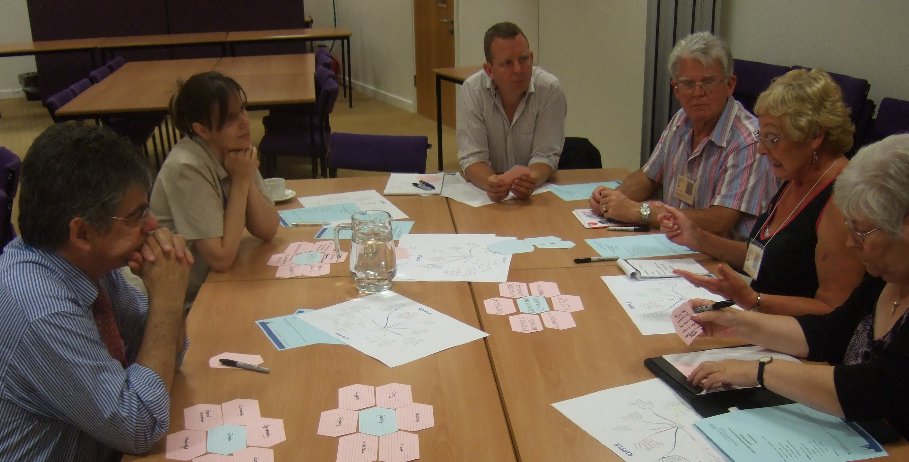
Then, in groups of six, each person shared the story behind their community and the reasons that kept drawing them back.
When everyone had spoken, the yellow hexagons—the names of the communities—were removed. The white ones were shuffled together. Without knowing which community they came from, participants looked for patterns.
Eventually they named the clusters.
The remarkable thing was how similar the patterns always became.
Very few people returned because of formal objectives. Most came back because of friendship.
Laughter.
Feeling welcome.
Being noticed.
Learning.
Helping others.
Shared purpose.
Belonging.
The exercise earned its name because it demonstrated that the glue holding communities together was overwhelmingly social.
In July 2013 I was invited by a few new friends in the NHS to design and facilitate a workshop exploring the increasing pressures on A&E at the hospital in Coventry.
I decided to use this exercise as the opening activity for the first workshop of the what became the RIPPLE (Respiratory Innovation Promoting a Positive Life Experience) COPD (Chronic Obstructive Pulmonary Disease) project. Blimey that’s a mouthful.
At the time I thought I was simply helping strangers become acquainted.
Nothing more.
Months later, during a lessons-learned review, we laid the outputs from that first morning alongside what participants had actually valued about the weekly Monday afternoon gatherings attended by specialists, breathing charities, church support staff, COPD sufferers and their Carers gathered in a church hall in Coventry which they had created as a direct result of the July workshop.
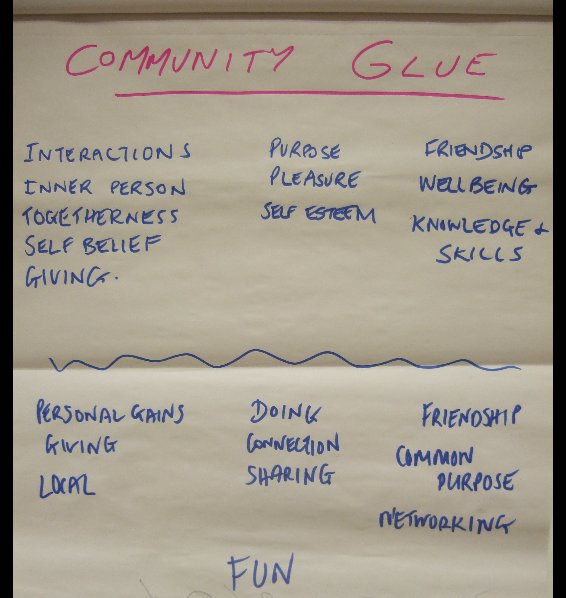
The two looked astonishingly alike. The clusters produced during a simple introductory exercise had anticipated the very benefits participants later described experiencing.
Not the medical interventions. Not the project plan. The human experience.
The reduction in isolation. The friendships. The reasons they looked forward to Monday afternoons.
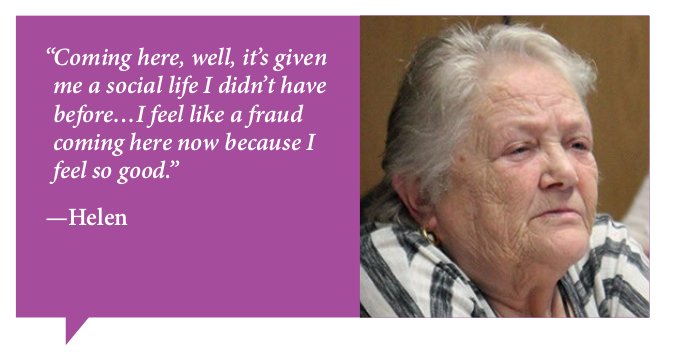
At my suggestion they listened to, captured and shared the stories of the people who came to their Monday afternoon events.
The exercise had somehow pointed towards the conditions that would later allow the project to flourish. Entirely by accident. Or so I thought.
Looking back now, I see something different.
The exercise wasn’t predicting the future. It was revealing what the system was already disposed towards.
The participants weren’t inventing desirable qualities. They were recognizing the kinds of relationships and experiences that consistently attract people into sustained participation.
Today I would describe these as affordances. Not instructions. Not objectives. Not outcomes.
Affordances are invitations. Features of a situation that make some futures easier to step into than others.
The Community Glue exercise surfaced those invitations before anyone knew exactly where they would lead.
There is an important lesson here.
When we design interventions, we often spend our energy specifying activities. Perhaps we should spend more time revealing affordances.
Instead of asking, “What project shall we run?”
we might ask, “What kinds of human connections make beneficial futures easier to emerge?”
That is a very different question. And perhaps a more useful one.
Field Reflection
I once thought Community Glue was an icebreaker. Now I think it was something else entirely.
It was an accidental way of making the present visible. Not the present as it is. The present as it is becoming.



Leave a comment